Do you ever wish you could see important driving information without taking your eyes off the road? Many modern cars have this feature built-in, but what if your ride is a bit older? That’s where aftermarket Head-Up Displays, or HUDs, come in. These clever gadgets project speed, navigation, and other vital data right onto your windshield.
Choosing the right aftermarket HUD can feel like a maze. You face confusing specs, different mounting styles, and questions about compatibility with your specific car. It’s tough to know which one offers the best visibility, is easy to install, and won’t break the bank. You want safety and convenience without the headache of buyer’s remorse.
This guide cuts through the noise. We will break down the essential features you need to look for, compare popular types, and give you clear steps to pick the perfect HUD for your driving needs. Get ready to upgrade your view and keep your focus exactly where it should be.
Top Aftermarket Car Hud Recommendations

- Advanced GPS Heads Up Display for Cars: This Car HUD uses dual-mode GPS + BDS technology with a 10Hz high refresh rate, connecting to up to 32 satellites for fast, stable, and accurate real-time speed tracking
- Clear Speed Projection without Looking Down: designed as a true heads up display for cars windshield, it projects speed directly into your line of sight, helping you stay focused on the road and drive more safely
- Auto Brightness for Any Lighting Condition: Built-in intelligent light sensor automatically adjusts screen brightness for clear daytime visibility and comfortable night driving without glare
- Plug & Play USB Power (5V) — Wide Vehicle Compatibility: This head up display for car is USB-powered, no OBD port required. Compatible with most cars, trucks, and motorcycles equipped with a USB port
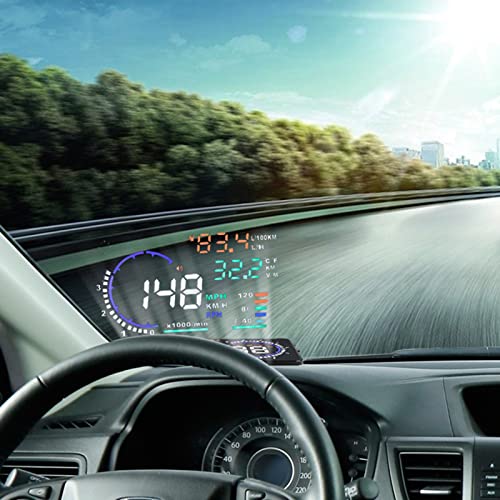
- --SAY GOODBYE TO ACCIDENTS: The head display is designed to display the car dashboard information at driver's front sight to avoid breaking traffic rules due to reading dashboard. The auto power on and off design means HUD works on while the car runs, and it will stop the service while your car powered off.
- --HIGH DEFINITION DISPLAY: You can choose manually adjust to your desired brightness, and it also will automatically reach the best state while you are driving. The use of nano-technology to eliminate unwanted reflections and can make display information more sharper.
- --RICH DISPLAY CONTENTS: HUD Head Up Display includes speed, engine speed, water temperature, battery voltage, instantaneous fuel consumption, average fuel consumption, mileage measurement. Plus, it will show fault code for you. It can be applied for cars in line with OBD II or EUOBD (on board automatic diagnostic system).
- --FRIENDLY REMINDER: HUD Head Up Display will flicker and alarm when the vehicle exceeds the speed limit set up in advance. The fatigue driving indicator light will flash to remind the driver to have a rest when it comes to a long drive. It also will remind you for high water temperature alarm, low voltage alarm, and shift reminding.

- Advanced GPS Speed Monitoring: The smart in car hud co pilot provides real-time vehicle speed information through satellite positioning technology, helping drivers easily view current MPH data while keeping Designed for everyday commuting, road trips, and highway driving
- Clear Windshield Viewing Experience: This smart hud display car windshield creates an easy-to-read speed viewing area with large digital numbers and a glare-resistant design. The bright display allows quick speed checks in different lighting environments without constantly looking down at the dashboard
- Universal Vehicle Compatibility: The smart hud for car works with most vehicles equipped with a USB power source, including cars, trucks, and motorcycles. Simple plug-in setup allows quick installation without connecting to the vehicle OBD port or complicated wiring
- Smart Light Adjustment Function: The smart in car hud copilot features automatic brightness adjustment that responds to surrounding light conditions. The display can maintain clear visibility during daytime driving while providing a more comfortable viewing experience at night


- Strong Signal Reception: Our car hud uses dual-mode chip technology—GPS+BDS signals—with a high refresh rate of 10 Hz for rapid, accurate reception. It can pick up to 32 satellite signals, it maintains a stable connection for precise speed data, whether you're driving in urban or rural areas
- Automatic Brightness Adjustment: The hud for cars features intelligent light sensors that automatically adjust screen brightness based on external light conditions. This ensures clear visibility in different lighting situations, whether it's bright daylight or dimly lit environments at night, providing a comfortable display for enhanced driving safety
- Suitable for all Cars with USB Port: Designed with simplicity in mind, our HUD is easy to install and suitable for all cars with USB port, including cars, motorcycles, and trucks. Whether you drive a compact sedan or a large commercial vehicle, installation is effortless, allowing you to enjoy the convenience and safety benefits of our HUD
- Smart In Car HUD Co Pilot: Large, Easy-to-Read Displa, Displays speed in MPH by default (up to 115 MPH) with a large font and anti-reflective metal shading, making it easy to read even for older drivers or while wearing sunglasses

- SAFER DRIVING WITHOUT LOOKING DOWN – Wirelessly connects to your iPhone or Android via CarPlay and Android Auto, projecting GPS navigation, calls, and music directly onto your windshield. Keep your eyes on the road ahead instead of glancing down at your phone or dashboard – because every second your eyes are off the road is a second too long.
- NO MORE SPEEDING TICKETS – Built-in GPS speedometer displays your real-time speed in large, easy-to-read numbers right in your line of sight. Set a custom overspeed warning alert, and the HUD will flash and beep the moment you exceed your limit – saving you from costly fines and points on your license.
- PLUG-AND-PLAY IN UNDER 5 MINUTES – No complicated installation, no professional tools needed. Simply connect to your vehicle’s OBD port or USB power, place it on your dashboard, and you’re ready to go. Works with practically any car, truck, or SUV – no modification required.
- CRYSTAL-CLEAR PROJECTION DAY AND NIGHT – The ultra-HD display delivers bright, sharp images on your windshield. Auto-dimming sensors adjust brightness based on ambient light – perfectly visible under harsh sunlight and not blinding at night. No glare, no reflection, just clear data when you need it.
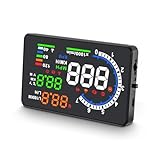
- 【APPLICABLE VEHICLES】——HUD A8 is only applicable to OBDII and EOBD, suitable for automobile of production years (OBDII and EOBD were used in other regions after 2003 and 2007 in other regions), but doesn’t support OBD I and JOBD.
- 【LARGE HD DISPLAY】——A8 HUD is designed with an ultra-large HD 5.5-inch display, with clearer information display and multi-function switching, allowing you to monitor speed more comfortably, bringing you a better driving experience and more fun.
- 【RICH DISPLAY DATA】——Almost everything you may need to read during driving will be displayed by this HUD, including vehicle speed, water temperature, voltage, driving distance measurement, voltage alarm, speeding alarm, free switching between kilometers and miles. It’s a good helper for your driving.
- 【MULTI-FUNCTION】——A8 HUD is upgraded with new functions, making it different from the traditional HUD on the market and more competitive. Since A8 is based on reading data from the trip computer, it can be used to read automobile data information, such as car failure detection, failure alarm and failure clearing. A multifunctional tool to help you understand your car.
The Essential Guide to Buying Your Aftermarket Car HUD
A Head-Up Display (HUD) shows important driving information right on your windshield. This keeps your eyes on the road. Aftermarket HUDs let you add this cool tech to almost any car. Choosing the right one can be tricky. This guide helps you pick the best device for your needs.
Key Features to Look For
When shopping for an aftermarket HUD, several features make a big difference in how useful the device is.
Display Quality and Visibility
- Brightness Adjustment: A good HUD must adjust its brightness automatically. It needs to be bright enough to see on a sunny day but dim enough not to blind you at night.
- Display Color: Look for clear, crisp colors. Blue and white displays often offer better contrast than older green ones.
- Reflective Film: Some HUDs require a special reflective film stuck to your windshield. Others work fine without it. Check if the film is included and easy to apply.
Data Displayed
What information does the HUD show? Make sure it covers what you need most.
- Speed (Essential)
- RPM (Engine Revolutions)
- Water Temperature
- Fuel Consumption
- Navigation Prompts (If supported)
Connectivity and Installation
How does the HUD get its data? This is very important for quality.
- OBD-II Connection: Most modern HUDs use the On-Board Diagnostics (OBD-II) port. This port is usually under the steering wheel. This connection pulls speed, RPM, and other engine data accurately.
- GPS Connection: Some basic models only use GPS for speed. OBD-II is usually better because it syncs perfectly with your car’s actual speed.
Important Materials and Build Quality
The materials used affect how long your HUD lasts and how clear the display looks.
- Housing Material: Most good HUDs use durable, heat-resistant plastic. Since the device sits on your dashboard, it gets very hot in the sun. Cheap plastic can crack or warp quickly. Look for ABS plastic.
- Lens Quality: The lens that projects the image should be clear and scratch-resistant. Poor lens quality causes blurry or distorted numbers.
Factors That Improve or Reduce Quality
What makes one HUD much better than another? It often comes down to how well the device handles different driving situations.
Quality Boosters:
- Automatic Brightness Sensors: These sensors constantly check the light outside and adjust the display. This greatly improves daytime and nighttime visibility.
- Error-Free Data Sync: A high-quality HUD syncs data instantly with your car via OBD-II. You should not see lag between your car’s speedometer and the HUD speed.
Quality Reducers:
- Excessive Glare: Poorly designed hoods or cheap lens materials cause glare, especially when driving toward the sun.
- Complex Setup: If setting up the OBD-II connection or calibrating the speed takes hours, the user experience suffers greatly. Simple, plug-and-play setups are usually better quality.
User Experience and Use Cases
How will you use your HUD? Think about your daily driving habits.
- Commuting: If you drive the same route daily, you need good navigation prompts and steady speed readings. A HUD minimizes looking down at the dash during stop-and-go traffic.
- Performance Driving: If you track your car or enjoy spirited driving, having immediate RPM and water temperature readings is crucial. You need a device that updates very quickly.
- Safety First: The main benefit is safety. A HUD lets you check your speed without taking your eyes far from the road. This is the primary use case for everyone.
10 Frequently Asked Questions (FAQ) About Aftermarket Car HUDs
Q: Will an aftermarket HUD work with my older car?
A: It depends. Most modern HUDs need an OBD-II port, which most cars made after 1996 have. If your car is very old, it might only work with a GPS-only model.
Q: Do I need a special windshield for a HUD to work?
A: Some HUDs work fine on any windshield. Others suggest placing a special reflective film on the area where the image appears. This film stops the image from showing a “double reflection.”
Q: How hard is the installation process?
A: For OBD-II models, installation is usually simple: plug the device into the port under the dash and place the unit on top. GPS-only models are even easier.
Q: Will the HUD affect my car’s warranty?
A: Plugging into the OBD-II port is usually safe because it is a diagnostic connection, not a permanent modification to the car’s main wiring.
Q: Why does the speed on the HUD not match my car’s speedometer exactly?
A: This happens because the car manufacturer often programs the speedometer to read slightly higher than the actual speed for safety reasons. If you use an OBD-II connection, you can usually calibrate the HUD to match your car’s factory reading.
Q: Can a HUD display navigation directions?
A: Yes, many newer HUDs connect to your smartphone via Bluetooth or Wi-Fi. They then display turn-by-turn directions from apps like Google Maps or Waze right on the windshield.
Q: Does the HUD work well in bright sunlight?
A: High-quality HUDs have excellent brightness control. Look for models specifically advertising high brightness (measured in nits) for good daytime visibility.
Q: What is the difference between OBD-II and GPS HUDs?
A: OBD-II HUDs pull data directly from your car’s computer, giving you RPM, temperature, and accurate speed. GPS HUDs only use satellite signals, so they usually only show speed and sometimes direction.
Q: Will the HUD unit melt on my dashboard?
A: Good units use heat-resistant plastic. Avoid placing very cheap units directly in the path of intense, direct sun for long periods, as the housing could warp over time.
Q: Can I turn the HUD off when I don’t want it on?
A: Yes. Most units have an on/off button. If you unplug the OBD-II cable, the unit will stop receiving data and turn off.

Hi, I’m Mallory Crusta, the heart and mind behind LovelyPetSpot.com.. As a passionate pet enthusiast, I created this space to share my experiences, expertise, and love for all things pets. Whether it’s helpful tips, heartfelt stories, or advice for pet parents, my mission is to make the journey of caring for your furry, feathery, or scaly friends as joyful and fulfilling as possible. Join me in celebrating the incredible bond we share with our animal companions!