Imagine you’re building a magnificent treehouse. You have all the best wood and tools, but if you choose the wrong supplier for your nails and screws, your whole project could fall apart! The same idea applies to businesses. Picking the right “cost provider strategy” is like choosing the best suppliers for all your company’s needs.
It’s a big decision, and frankly, it can be confusing! Businesses often feel overwhelmed trying to figure out the best way to get the things they need without spending too much money. This can lead to frustration, wasted resources, and even hurt the company’s ability to grow. You want to make sure you’re getting good value and not overpaying for essential goods or services.
This blog post will make it much clearer. We’ll break down what a cost provider strategy really means and why it’s so important. By the end, you’ll understand how to make smart choices that save your business money and help it thrive. Get ready to learn how to pick the best partners for your company’s success!
Top Cost Provider Strategy Recommendations




- Magnetic Travel Chess Set:All chess pieces are magnetic and felt for non-slip,and the surface of the chess board is also magnetic to hold the pieces securely and prevent them from shifting when playing.It stays firmly attached to the board even on bumpy roads or when the board is upside down.
- High Quality Wood:Made of wood ,walnut coloring design.All chess pieces and chess boards are polished,with a smooth surface,smooth cutting and excellent touch feeling.There are two metal locks with retro design on the outside of the chessboard, which will not be oxidized by sweat and can lock the chessboard firmly.
- Folding Wooden Box Design:The game board measures 15.4 X 7.68 X 2 inches when folded, and 15.4 X 15.35 X 1 inches when unfolded, opens up to give you the ultimate gaming experience,takes up little space when folded, easy to store and portable. Chess sets includes sponge card slots, each piece has its own slot location. This internal storage design avoid the chess from bumping into each other and getting damaged.
- Design of Rounded Corners and Collision Color : The color clash design not only adds a sense of fashion to the chess board for adults, but also retains the beautiful natural grain of the original wood, the color is soft and not dazzling,making it a beautiful classical chessboard with a great artistic flavor.Our chess sets has a round edge,elegant and smooth lines,improving the ability to resist falling.
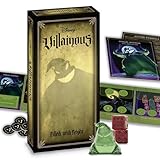
- Embrace the Chaos of Oogie Boogie: Step into the shoes of the trickster from The Nightmare Before Christmas! Harness his unique dice-rolling mechanics to outsmart and ensnare the Pumpkin King in a web of delightful mischief and mayhem!.
- Engaging Strategic Gameplay: Master the art of deception and connect with your inner villain as you navigate your realm with cunning tactics to outsmart your opponents utilizing critical thinking, problem solving and memorization skills.
- Visually Stunning Experience: Immerse yourself in the captivating world of The Nightmare Before Christmas with exquisite artwork and thematic components that enhance every game session. With more Villains to choose from, exciting gameplay abounds.
- Each villain has unique objectives and abilities, providing a fresh and distinct strategic challenge with every game session! Experience the thrill of mastering different play styles and navigate the diverse powers of your favorite Disney villains.
Choosing Your Cost Provider Strategy: A Smart Shopper’s Guide
Selecting the right cost provider strategy for your product is a big decision. It helps you decide how much to charge and how to make money. This guide will help you understand what to look for.
1. Key Features to Look For
When you’re looking at cost provider strategies, some features are super important.
a. Pricing Models
This is how the strategy helps you set prices.
- Fixed Pricing: You charge one price for everything. This is simple.
- Subscription Pricing: Customers pay regularly, like monthly or yearly. This gives you steady income.
- Tiered Pricing: You offer different versions of your product at different prices. More features cost more.
- Freemium: You offer a basic version for free and charge for extra features. This attracts many users.
b. Value Proposition Alignment
Does the strategy match what makes your product special? If your product offers a lot of amazing features, a tiered or subscription model might work best. If it’s a simple tool, fixed pricing could be good.
c. Scalability
Can the strategy grow with your business? As you get more customers, can the pricing still work? A good strategy should handle more users without breaking.
d. Profitability Analysis Tools
Some strategies come with tools. These tools help you see if you’re making enough money. They can show you how many customers you need to be profitable.
2. Important Materials (Concepts)
Cost provider strategies aren’t physical things, but they use important ideas.
a. Cost Structure
This is all the money you spend to make and sell your product. It includes things like making the product, paying employees, and marketing. Knowing your costs helps you set prices that make you money.
b. Market Analysis
You need to know what other companies are charging. What are customers willing to pay? This research helps you set competitive prices.
c. Customer Segmentation
Who are your customers? Do they have different needs? You might offer different prices to different groups of customers.
3. Factors That Improve or Reduce Quality
How well a cost provider strategy works depends on a few things.
a. Factors That Improve Quality
- Clear Communication: When customers understand your pricing, they are happier.
- Flexibility: Being able to change your prices as needed is good.
- Customer Feedback: Listening to what customers say about prices helps you improve.
b. Factors That Reduce Quality
- Hidden Fees: Unexpected charges make customers angry.
- Complex Pricing: If your prices are hard to understand, people won’t buy.
- Ignoring the Market: Not watching competitors can lead to bad pricing.
4. User Experience and Use Cases
How does the strategy feel to use, and when is it best?
a. Ease of Implementation
How easy is it to start using this strategy? Some are simple to set up, while others need more work.
b. Customer Perception
How do customers see your prices? Do they think your product is a good deal? A good strategy makes your product seem valuable.
c. Common Use Cases
- Software as a Service (SaaS): Subscription and freemium models are very common here.
- Physical Products: Fixed pricing and tiered pricing are often used.
- Consulting Services: Fixed project fees or hourly rates are typical.
Cost Provider Strategy: Frequently Asked Questions
Q1: What is a cost provider strategy?
A: A cost provider strategy is a plan for how your business will set prices for its products or services to make money.
Q2: Why is choosing the right strategy important?
A: It helps you make sure you earn enough money to run your business and grow. It also affects how customers see your product.
Q3: What’s the difference between fixed pricing and subscription pricing?
A: Fixed pricing is a one-time payment for a product. Subscription pricing means customers pay over time, like every month.
Q4: When is freemium pricing a good idea?
A: Freemium is good when you want to attract many users with a basic free version and then get them to pay for more advanced features.
Q5: How do I know my product’s cost structure?
A: You figure out all the money you spend to make, sell, and support your product. This includes materials, labor, and marketing costs.
Q6: Should I look at what my competitors charge?
A: Yes, understanding competitor pricing helps you set prices that are fair and competitive in the market.
Q7: What are hidden fees and why are they bad?
A: Hidden fees are extra charges that customers don’t expect. They make customers unhappy and can hurt your reputation.
Q8: How can I get customer feedback on my pricing?
A: You can use surveys, ask directly, or look at online reviews to see what customers think about your prices.
Q9: Is it okay to change my pricing strategy later?
A: Yes, it’s often good to be flexible and adjust your pricing strategy as your business and the market change.
Q10: What is the goal of a cost provider strategy?
A: The main goal is to make your business profitable while offering good value to your customers.

Hi, I’m Mallory Crusta, the heart and mind behind LovelyPetSpot.com.. As a passionate pet enthusiast, I created this space to share my experiences, expertise, and love for all things pets. Whether it’s helpful tips, heartfelt stories, or advice for pet parents, my mission is to make the journey of caring for your furry, feathery, or scaly friends as joyful and fulfilling as possible. Join me in celebrating the incredible bond we share with our animal companions!