As an Amazon Associate I earn from qualifying purchases.
Turning hanks and skeins into usable yarn cakes can take time, strain your hand, and leave you managing uneven tension. A Wool Winder gives you a neater center-pull cake, but the right model depends on your yarn volume and workspace.
Capacity matters if you regularly wind bulky projects, while a compact manual model may suit occasional use. You should also consider whether you want a table clamp, a clamp-free base, adjustable speed, or hands-free winding.
These five picks cover small manual winders, sturdy larger-capacity designs, and automatic options. They were selected from the listed features to represent different winding needs rather than colour or size variants.
Below, you will find the key difference between each model, followed by practical buying guidance to help you match capacity, effort, and setup to your projects.
Our Top 5 Wool Winder Picks at a Glance
| Product | ||
|---|---|---|
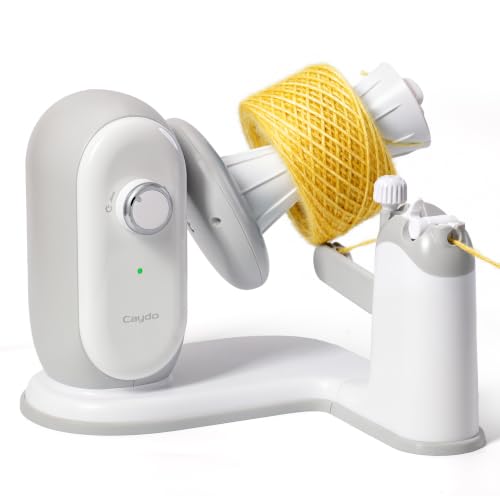 |
Caydo A1 Pro Max Electric Yarn Winder Large automatic winding |
Check Price |
 |
VCNFPRO 5.0 Upgraded Electric Yarn Winder Very large yarn batches |
Check Price |
 |
Stanwood Needlecraft Large Metal Yarn Winder Heavy-duty manual winding |
Check Price |
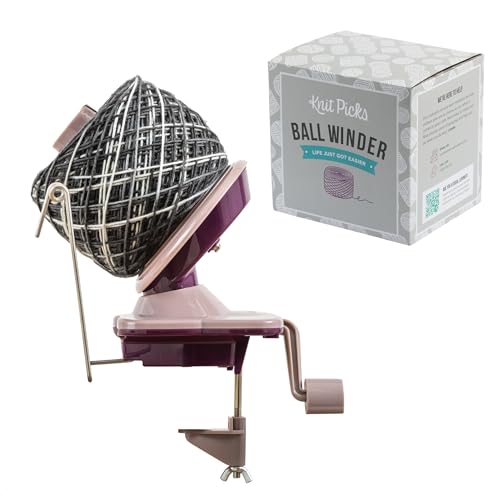 |
Knit Picks Manual Yarn Ball Winder Compact occasional use |
Check Price |
 |
Caydo M1 Electric Yarn Winder Compact powered winding |
Check Price |
Top 5 Wool Winders: Detailed Reviews
1. Caydo A1 Pro Max Electric Yarn Winder
The Caydo A1 Pro Max is a Wool Winder for large, tidy yarn cakes with minimal hand effort. Its clamp-free tabletop base lets you place it on any flat desktop without finding an edge or adjusting clamps. The 16-ounce capacity suits anything from fine lace to bulky wool, including yarn for sweaters and blankets. A stabilizer yarn guide arm and adjustable tension spring help control the feed for smooth, tight cakes, while automatic winding reduces repetitive wrist movement. The resulting compact cakes stack neatly for simpler storage and organisation.
What We Like:
- The clamp-free base makes setup quick on a suitable flat desktop.
- Automatic winding reduces repetitive hand movements and wrist pressure.
- The 16-ounce capacity handles large batches and bulky yarn.
- The guide arm and adjustable tension spring support controlled, tidy cakes.
- Compact cakes stack neatly, helping keep yarn storage organised.
What Could Be Improved:
- It needs a flat desktop for its clamp-free base, so it offers less flexibility on uneven or unsuitable surfaces.
- Its large, automatic design may be more than you need for occasional small yarn projects.
Buy it if you regularly wind large amounts of yarn, work with bulky wool, or want to reduce manual winding effort. The 16-ounce capacity and tidy cake shape suit substantial projects and organised storage. Skip it if you only wind small quantities occasionally or lack a suitable flat desktop.
2. VCNFPRO 5.0 Upgraded Electric Yarn Winder
The VCNFPRO 5.0 Upgraded Electric Yarn Winder is built for very large yarn batches, with two rollers rated for up to 20 ounces in total. Its 7,200 RPM German-made motor is designed for fast powered winding, while precision gears with a stated tooth-pitch error of no more than 0.03 mm aim to reduce jamming, tooth skipping, and wobble. For a Wool Winder, the simple electric operation should suit beginners and frequent project work. It also includes two-year limited protection and lifetime one-to-one after-sales support, though the listing does not specify noise or compatibility details.
What We Like:
- Dual rollers handle up to 20 ounces of yarn in total, making it suitable for large batches.
- Electric operation reduces the effort required for repeated winding.
- The 7,200 RPM motor is designed for fast powered winding.
- Precision gears aim to reduce jamming, tooth skipping, and wobble.
- The straightforward design should be approachable for beginners.
What Could Be Improved:
- It requires access to power, so it is less flexible than a manual winder.
- The 20-ounce capacity is a stated total limit, so larger batches require multiple sessions.
- The listing does not provide noise or yarn-compatibility details, which makes suitability harder to judge.
Buy this if you regularly wind large amounts of yarn and want powered operation with a stated 20-ounce total capacity. Skip it if you prefer portable hand winding, lack a convenient power source, or need detailed information about noise and compatibility before choosing.
3. Stanwood Needlecraft Large Metal Yarn Winder
The Stanwood Needlecraft Large Metal Wool Winder is a manual ball winder built for substantial yarn batches. Its 3-millimeter-thick steel construction and rust-resistant powder coating are designed to keep it steady during winding, while reinforced nylon gears balance durability with reduced noise. The 10-ounce capacity can handle more than twice the yarn of a conventional winder, helping reduce how often you stop to reload. It creates tidy center-pull yarn balls, and the tool-less setup lets you start winding without searching for a wrench.
What We Like:
- The steel construction is made for heavy-duty manual winding.
- The 10-ounce capacity suits larger yarn batches and reduces reloads.
- The reinforced nylon gear is designed for durability and lower noise.
- Center-pull balls keep yarn retrieval neat during knitting.
- Tool-less setup makes preparation straightforward.
What Could Be Improved:
- You must turn the handle yourself, so it is less convenient than an electric winder for frequent or high-volume work.
- Its 10-ounce capacity may be more than you need for small, occasional projects.
- The heavy-duty steel design is focused on stability and capacity rather than compact storage.
Buy this if you regularly wind large yarn batches and want a sturdy manual tool with center-pull results, quiet reinforced gearing, and simple setup. Skip it if you prefer powered winding, work mostly with small amounts of yarn, or need a particularly compact winder for occasional use.
4. Knit Picks Manual Yarn Ball Winder
The Knit Picks Manual Yarn Ball Winder is a compact Wool Winder for turning hanks and skeins into tidy, center-pull yarn cakes. It handles up to 100 grams or 3.5 ounces, covering weights from lace and fingering through worsted and bulky. You attach it to a table edge or surface up to 1.5 inches thick, twist on the spindle, position the guide arm, and wind by hand. The removable spindle and folding guide arm make storage easier, while a yarn swift can help organize skeins during winding.
What We Like:
- It creates compact center-pull cakes that sit neatly while you knit or crochet.
- The 100-gram capacity suits many standard skeins and a broad range of yarn weights.
- Quick assembly gets you winding with only the spindle and guide arm to position.
- The removable spindle and folding guide arm reduce its storage footprint.
- Its manual design avoids the need for a power source.
What Could Be Improved:
- Hand winding takes more effort and time than using an electric model.
- The 100-gram capacity may not suit very large yarn batches.
- It needs a suitable table edge or surface no thicker than 1.5 inches.
Buy this if you want a compact manual winder for occasional yarn preparation, especially when easy storage matters. It suits knitters and crocheters working with typical skeins across several yarn weights. Skip it if you regularly wind large batches or want powered winding with less hands-on effort.
5. Caydo M1 Electric Yarn Winder
The Caydo M1 Electric Yarn Winder is a compact Wool Winder for turning yarn into tidy cake-shaped balls without tiring your hands. Automatic winding handles the repetitive work, while dual tension springs keep yarn steadier and reduce vibration, so you do not need to pull the strand manually. Stepless speed control lets you adjust the winding pace for different yarn types and preferences. Its capacity reaches up to 7oz, covering delicate lace through bulky yarn, but the compact design suits moderate batches better than very large ones.
What We Like:
- Automatic winding reduces hand fatigue during repetitive yarn preparation.
- Dual tension springs help maintain steadier yarn tension while winding.
- Stepless speed control gives you finer control over the winding pace.
- The compact body fits more easily into home craft spaces and workshops.
- It handles yarn from delicate lace to bulky weight, up to 7oz.
What Could Be Improved:
- The 7oz capacity may not suit especially large yarn batches or frequent high-volume winding.
- You must adjust the speed yourself to match the yarn and your preferred winding pace.
- Its compact format prioritizes portability and space-saving over maximum batch capacity.
Buy the Caydo M1 if you want powered winding in a compact body and usually prepare moderate amounts of yarn at home. It is especially useful if hand winding causes fatigue or you want more consistent tension. Skip it if you regularly process very large batches or need a heavy-duty, high-capacity winder.
How To Choose A Wool Winder
A good Wool Winder should match the amount of yarn you handle, the space you have available, and how much effort you want to put into each cake. Start by deciding whether you need powered speed for regular winding or a manual tool for occasional jobs. The right choice is less about having the most features and more about avoiding a machine that is too small, too bulky, or unnecessarily complicated for your routine.
Wool Winder capacity and yarn size
Check the stated capacity before you buy. A larger winder makes more sense if you regularly combine skeins, prepare yarn for storage, or work with bulky yarn. Smaller models can be easier to store, but they may require more frequent rewinding when you handle large batches. Also consider the finished cake: its size should suit your swift, project bag, and storage system.
Electric or manual operation
Electric winders reduce hand effort and can process yarn more quickly, which helps when you are preparing several skeins. They do need access to power and may take up more space. Manual winders are quieter and simpler, and you control the pace yourself, but winding takes longer and requires continuous turning. Choose powered operation for volume; choose manual operation if portability, simplicity, or occasional use matters more.
Stability and construction
A winder needs to stay firmly in place while the yarn pulls against it. Look for a secure base or reliable clamp system, especially if you work with large skeins or wind with tension. Metal construction can be a sensible priority for frequent, heavy-duty use, while a lighter compact design may be more practical if you need to pack the tool away after every project.
Ease of storage and everyday control
Think about setup, cleanup, and control as well as winding speed. A compact unit is easier to store, but a larger model may offer a more comfortable workflow for repeated batches. You should also consider whether you want to monitor the winding closely and adjust tension by hand. No winder replaces a suitable swift or careful yarn handling, so leave enough room for the full winding setup.
Which Wool Winder Should You Choose?
The Caydo A1 Pro Max Electric Yarn Winder is the best overall pick for fast, tidy preparation because it combines automatic operation with large-capacity winding. If you regularly handle very large yarn batches, the VCNFPRO 5.0 Upgraded Electric Yarn Winder is the stronger alternative. Choose the Stanwood for heavy-duty manual work, the Knit Picks for compact occasional use, or the Caydo M1 when you want powered winding in a smaller format.

Hi, I’m Mallory Crusta, the heart and mind behind LovelyPetSpot.com.. As a passionate pet enthusiast, I created this space to share my experiences, expertise, and love for all things pets. Whether it’s helpful tips, heartfelt stories, or advice for pet parents, my mission is to make the journey of caring for your furry, feathery, or scaly friends as joyful and fulfilling as possible. Join me in celebrating the incredible bond we share with our animal companions!