Imagine your goats looking healthy, their coats shiny, and their energy high. But sometimes, tiny, unseen enemies – intestinal worms – can steal that vitality. These parasites can make your goats weak, stop them from growing, and even cause serious health problems. It’s a worry for any goat owner, and choosing the right wormer can feel like navigating a maze.
You want the best for your herd, but the sheer number of worming products out there can be overwhelming. What works for one farm might not work for another. You might wonder which ingredients are safest, most effective, and how to avoid resistance. These questions are common, and finding clear answers can be tough. That’s why we’re here to help.
In this post, we’ll break down the world of goat wormers. We’ll explore how they work, what to look for, and how to pick the best option for your specific goats. By the end, you’ll feel more confident about keeping your herd healthy and happy, free from the threat of internal parasites. Let’s dive in and learn how to protect your beloved goats.
Top Goat Wormer Recommendations

- Dewormer for Goats
- Goats - For the removal and control of adult stomach worms: Haemonchus contortus and Teladorsagia circumcincta
- Beef and Dairy Cattle - 5 mg/kg (2.3 mg/lb.) for the removal and control of over ten different kinds of worms

- Effective Parasiticide: Cydectin Oral Drench is a ready-to-use dewormer and parasiticide solution for sheep to control internal parasites
- Effective Parasite Control: Provides treatment to control infections due to 13 species of internal parasites in both larval and adult stages
- Active Ingredient Moxidectin: This Milbemycin parasite solution contains 0.1% moxidectin, which works to paralyze and eliminate parasites in healthy sheep
- Use as Directed: This oral drench is formulated for sheep, has a short withdrawal time of seven (7) days, and is dung beetle-friendly* *Stromberg B, et al. Production responses following strategic parasite control in a beef cow/calf herd. Vet Parasitol. 1997:68(4):315-322.

- Dewormer for Goats and Sheep with Fenbendazole, Liquid Dewormer for Roundworms, Lungworms, Tapeworms & More
- Broad-Spectrum Worm Control: Formulated with 10% Fenbendazole, this dewormer helps control common internal worms in goats and sheep, including roundworms and lungworms, supporting overall herd condition
- Supports Weight, Appetite & Vitality: Internal worms can affect appetite, weight, and energy levels. This deworming formula helps maintain healthy digestion, supports body condition, and keeps your animals active and thriving
- Flexible & Easy Administration: This liquid formula can be given directly by mouth for accurate dosing, or mixed with feed or water for added convenience, making it suitable for both individual use and herd management

- 𝗦𝘁𝗿𝗶𝗱𝗲𝗚𝘂𝗮𝗿𝗱 𝗕𝗿𝗼𝗮𝗱 𝗦𝗽𝗲𝗰𝘁𝗿𝘂𝗺 𝗔𝗻𝗶𝗺𝗮𝗹 𝗦𝘂𝗽𝗽𝗼𝗿𝘁:- Developed For Horses, Cattle, Goats, Sheep, And Swine. This Advanced Liquid Formula Supports Internal Balance And Overall Animal Condition As Part Of A Professional Care Routine.
- 𝗣𝗿𝗼𝗳𝗲𝘀𝘀𝗶𝗼𝗻𝗮𝗹 𝟭.𝟴𝟳% 𝗜𝘃𝗲𝗿𝗺𝗲𝗰𝘁𝗶𝗻 𝗙𝗼𝗿𝗺𝘂𝗹𝗮:- Formulated With High-Purity Ivermectin (1.87%), Recognized For Its Consistent Use In Animal Health Programs And Routine Livestock Management.
- 𝗟𝗶𝗾𝘂𝗶𝗱 𝗢𝗿𝗮𝗹 𝗦𝗼𝗹𝘂𝘁𝗶𝗼𝗻:- Easy-To-Administer Liquid Format Designed For Flexible Use. Can Be Mixed With Feed Or Water For Convenient Daily Application Across Different Farm Sizes.
- 𝗣𝗿𝗲𝗰𝗶𝘀𝗶𝗼𝗻 𝗗𝗼𝘀𝗶𝗻𝗴 𝗕𝘆 𝗕𝗼𝗱𝘆 𝗪𝗲𝗶𝗴𝗵𝘁:- Designed For Accurate Dosing Based On Animal Body Weight, Allowing Better Control And Consistency When Used As Directed.
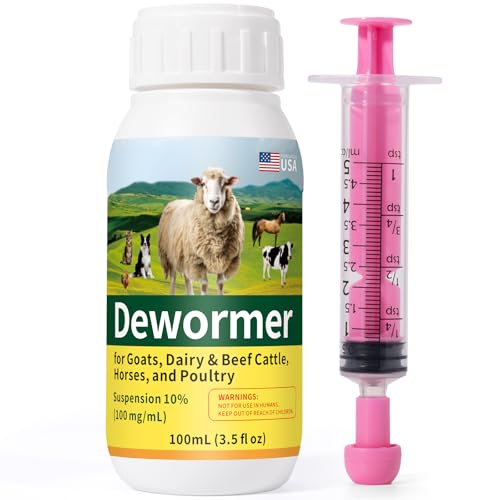
- Fast & Effective Parasite Control: Our 10% dewormer liquid rapidly targets stomach worms, lungworms, hookworms, nodular worms, roundworms, and pinworms, helping your animals regain appetite, energy, and vitality
- Safe for All Animals: Formulated for mixed farms and multi-pet households, this fenbendazole dewormer works safely for goats, sheep, horses, cattle, dogs, cats, chickens, rabbits, and other livestock—no more juggling multiple dewormers
- Veterinarian-Trusted Formula: It is widely used and well-studied. Unlike ivermectin, which mainly paralyzes worms, fenbendazole delivers thorough, lasting parasite control while remaining gentle on your animals’ digestion
- Gentle Yet Powerful: The non-irritating formula suits animals of all ages and sizes, supporting a healthy internal balance and overall wellness. Effective yet easy on digestion, goat dewormer helps your animals feel good from the inside out

- TRUSTED ROUTINE CARE: Carefully crafted liquid formula made with thoughtfully selected ingredients. Designed for routine animal care use, with a gentle composition suitable for regular feeding and daily management
- SUPPORTS DAILY BALANCE: Helps support digestive comfort and normal feeding habits as part of an everyday care routine. Easy to incorporate into existing feeding programs without disrupting daily schedules
- EASY LIQUID APPLICATION: Simple liquid format allows for easy measuring and mixing with water or feed. Designed for convenient daily use, helping reduce feeding resistance and save time during routine care
- MULTI-ANIMAL USE: Suitable for a variety of livestock and farm animals. Fits naturally into day-to-day feeding and care routines for animals of different types and sizes

- Medicated Goat Dewormer Complete Feed
- Eliminates the Need for Stressful Shots and Drenches
- For All Classes of Meat and Dairy Goats, Including Pregnant and Lactating Does
- Breaks the Lifecycle of Three Major Gastrointestinal Worms – Barber Pole Worm, Tapeworm, Brown Stomach Worm

- 2 Pack
- Dewormer for Goats
- Not For Human Use
- 2 x 125mL 4.2 fluid ounce
Choosing the Best Goat Wormer: A Guide for Healthy Goats
Keeping your goats healthy is a top priority for any owner. One of the biggest challenges in goat care is controlling internal parasites, commonly known as worms. Worms can steal nutrients from your goats, making them weak and sick. That’s where goat wormers come in. This guide will help you pick the right wormer to keep your herd thriving.
Key Features to Look For in Goat Wormers
When you’re shopping for goat wormer, keep these important features in mind:
- Effectiveness Against Different Worms: Not all wormers work on all types of worms. Look for a product that targets a broad spectrum of common goat parasites. This includes stomach worms, lungworms, and tapeworms.
- Ease of Administration: Goats can be tricky to handle. A wormer that is easy to give, whether it’s a paste, liquid, or injectable, will make your job much simpler.
- Safety for Different Goat Ages and Types: Some wormers are not safe for young kids, pregnant does, or dairy goats. Always check the label to ensure the product is appropriate for your specific goats.
- Withdrawal Times: If you raise goats for meat or milk, you need to know how long you must wait after administering the wormer before you can use their products. This is called the withdrawal period.
- Resistance Management: Parasites can become resistant to wormers over time. Choosing a wormer with a different active ingredient than what you’ve used recently can help prevent resistance.
Important Materials (Active Ingredients)
The “active ingredient” is what actually kills the worms. Different wormers use different active ingredients. Some common ones include:
- Benzimidazoles (like Fenbendazole): These are common and effective against many types of worms.
- Macrocyclic Lactones (like Ivermectin and Moxidectin): These are very effective against a wide range of internal and external parasites.
- Pyraziquantel: This is often used to target tapeworms.
It’s a good idea to discuss with your veterinarian which active ingredients are most appropriate for your region and your herd.
Factors That Improve or Reduce Quality
Several things can affect how good a goat wormer is:
Factors That Improve Quality:
- Reputable Brands: Stick with well-known brands that have a good track record.
- Clear Labeling: A quality product will have clear instructions, dosage information, and warnings.
- Veterinarian Recommended: Products that your vet suggests are often reliable.
Factors That Reduce Quality:
- Expired Products: Always check the expiration date. Old wormers may not work.
- Improper Storage: Wormers need to be stored correctly. Storing them in extreme heat or cold can make them less effective.
- Using the Wrong Dosage: Giving too little wormer won’t kill all the worms. Giving too much can be harmful.
User Experience and Use Cases
Most goat owners use wormers as part of a regular herd health plan.
- Preventative Care: Wormers are often given on a schedule, especially during certain seasons when worm eggs are more likely to survive.
- Treatment of Sick Goats: If you notice a goat is losing weight, has a dull coat, or looks generally unwell, a wormer might be needed. It’s always best to consult your vet for diagnosis.
- Before Breeding or Kidding: Worming goats before they breed or before they have babies can help ensure a healthier pregnancy and stronger offspring.
The experience of using a wormer is usually straightforward. You’ll need to calculate the correct dose based on your goat’s weight. Then, you administer the wormer according to the product’s instructions. Observing your goats after treatment for any adverse reactions is also important.
Goat Wormer FAQs
Q: How often should I worm my goats?
A: This depends on your location, your herd’s exposure to parasites, and your management practices. Many owners worm their goats every 3-6 months, but it’s best to talk to your vet for a personalized schedule.
Q: Can I use dog or cat wormer on my goats?
A: No. You should only use wormers specifically labeled for goats. Other animal wormers may not be effective or could be harmful to your goats.
Q: What does “broad-spectrum” wormer mean?
A: A broad-spectrum wormer is effective against a wide variety of common internal parasites that affect goats.
Q: What happens if I don’t worm my goats?
A: Goats can suffer from poor growth, weight loss, anemia (low red blood cells), diarrhea, and in severe cases, death from parasitic infections.
Q: How do I know which wormer is best for my goats?
A: Consult your veterinarian. They can help you choose the most effective wormer based on the parasites common in your area and your herd’s specific needs.
Q: What are the signs that my goat might have worms?
A: Signs include weight loss, a dull coat, diarrhea, anemia (pale gums), and a pot-bellied appearance, especially in young goats.
Q: Are there natural ways to worm goats?
A: Some people use herbs like garlic or diatomaceous earth. However, these methods are often less effective than pharmaceutical wormers and may not be sufficient to control heavy parasite loads.
Q: What is a “FAMACHA” score?
A: FAMACHA is a scoring system used to assess the level of anemia in goats, which is often caused by parasitic worms. It helps owners decide which goats need deworming.
Q: Can wormer harm my goats?
A: When used correctly according to dosage and instructions, wormers are generally safe. However, using the wrong product, an incorrect dose, or a product that your goats are sensitive to can cause harm.
Q: Where can I buy goat wormer?
A: You can buy goat wormer at feed stores, farm supply stores, and from veterinarians.

Hi, I’m Mallory Crusta, the heart and mind behind LovelyPetSpot.com.. As a passionate pet enthusiast, I created this space to share my experiences, expertise, and love for all things pets. Whether it’s helpful tips, heartfelt stories, or advice for pet parents, my mission is to make the journey of caring for your furry, feathery, or scaly friends as joyful and fulfilling as possible. Join me in celebrating the incredible bond we share with our animal companions!