As an Amazon Associate I earn from qualifying purchases.
A bedroom door lock should give you privacy without creating a daily hassle. You may want traditional keys, a code for family or guests, or fingerprint access so you can leave your keys behind.
Fit matters first: these locks support different door thicknesses, backsets, and installation requirements. You should also consider how many people need access, whether you want auto-locking, and what happens if you prefer a backup key.
These picks cover several practical needs rather than repeating the same design. The selection includes keyed knobs, keypad entry, biometric access, app control, guest codes, and a two-door option.
Use the quick comparison to narrow the field, then read the detailed reviews and buying guide for fit, access methods, and setup considerations.
Our Top 5 Bedroom Door Lock Picks at a Glance
| Product | ||
|---|---|---|
 |
GHome Smart Fingerprint Door Lock Flexible keyless access |
Check Price |
 |
Yamiry Keypad Smart Door Knob Lock Families and guest access |
Check Price |
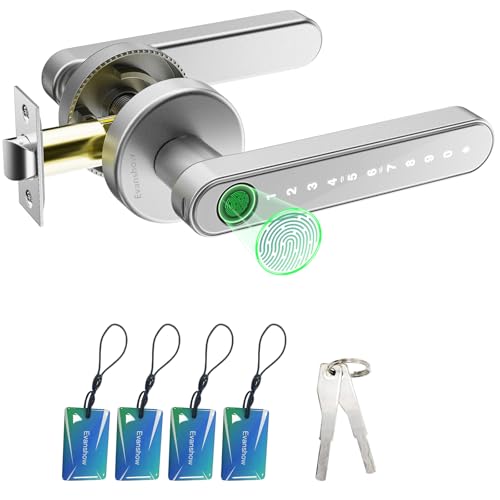 |
Evanshow Fingerprint Door Lock Multiple access methods |
Check Price |
 |
BESTTEN Keyed Entry Door Knob Traditional keyed entry |
Check Price |
 |
BESTTEN 2-Pack Keyed Entry Door Knobs Locking two bedrooms |
Check Price |
Top 5 Bedroom Door Lock Picks: Detailed Reviews
1. GHome Smart Fingerprint Door Lock
Bedroom Door Lock access is flexible here: GHome combines fingerprint recognition, keypad entry, app control, and auto-locking in one rechargeable door knob. You can store up to 20 fingerprints and 20 passwords, making it practical for household members or temporary guests. The app lets you manage access and share permanent or temporary permissions without an extra gateway. Its 400mAh battery takes 4–6 hours to charge and is rated for up to 10,000 unlocks or more than 300 days, depending on use.
What We Like:
- Fingerprint entry can unlock the door in about 1.5 seconds.
- Twenty fingerprint and password slots suit shared bedrooms and guests.
- The app supports permanent or temporary access management.
- Auto-locking reduces the chance of leaving the room unsecured.
- A rechargeable battery avoids routine disposable battery purchases.
What Could Be Improved:
- You must remember to recharge the battery, and charging takes 4–6 hours.
- App-based management adds setup and maintenance that a basic keyed knob avoids.
- The listed battery life depends on usage, so frequent access may shorten it.
Buy it if you want shared-home access that adapts to residents, guests, and changing permissions, especially if you prefer not to carry keys. Skip it if you want the simplest possible lock, dislike managing an app, or would rather avoid keeping a rechargeable battery topped up.
2. Yamiry Keypad Smart Door Knob Lock
The Yamiry Bedroom Door Lock is a keypad smart knob designed for shared homes, families, and guest rooms. It supports up to 20 user codes, plus a one-time code for visitors, so you can avoid handing out physical keys. The backlit keypad, low-battery indicator, and anti-prying user-code feature support everyday convenience and security. You can also use its duplicable key as a backup. Installation takes less than 15 minutes with a screwdriver, while adjustable auto-lock timing runs from 5 to 99 seconds or can be disabled. Its IP54 weather resistance adds flexibility for suitable exterior locations.
What We Like:
- Twenty user codes make it practical for family members or regular guests.
- One-time guest codes provide temporary access without sharing a lasting code.
- Auto-lock timing from 5 to 99 seconds suits different household routines.
- The backlit keypad and low-battery indicator help with nighttime use and maintenance.
- Simple screwdriver installation avoids a complicated setup process.
What Could Be Improved:
- The product information does not mention app control, remote access, or activity logs.
- Because the backup key is duplicable, physical copies can be harder to control than codes.
- The IP54 rating offers weather resistance, but the listing does not describe broader outdoor-use limits.
Buy it if you want flexible code-based access for a family bedroom, shared home, or guest room without managing several keys. Skip it if you need remote control, entry history, or a purely traditional lock. The duplicable key also makes it less suitable when physical-key control is essential.
3. Evanshow Fingerprint Door Lock
The Evanshow Fingerprint Door Lock gives you four ways to enter: fingerprint, password, mechanical key, or IC card. That flexibility suits bedrooms shared by family members, guests, or tenants, since you can avoid handing out physical keys. It stores up to 100 fingerprints and 50 passwords, plus four IC cards. The fingerprint reader is designed to recognise prints in less than a second. Installation requires no drilling or wiring and fits 1.18- to 1.97-inch-thick wooden doors with either swing direction, making it a practical Bedroom Door Lock upgrade for many existing doors.
What We Like:
- You get fingerprint, password, mechanical-key, and IC-card access in one lock.
- Storage for up to 100 fingerprints and 50 passwords accommodates families and guests.
- The fingerprint sensor is designed to recognise prints in less than a second.
- No drilling or wiring keeps installation accessible for existing wooden doors.
- Two mechanical keys provide a backup entry method.
What Could Be Improved:
- You must register an administrator fingerprint before use; until then, any fingerprint can unlock the door.
- It only fits wooden doors between 1.18 and 1.97 inches thick, so compatibility needs checking first.
- The four access methods may be more complexity than you need for a bedroom used by one person.
Buy it if you want flexible keyless access for a shared bedroom, guest room, home, hotel, office, or apartment and your wooden door fits the stated thickness range. Skip it if you prefer a simple keyed knob, cannot confirm door compatibility, or do not want to manage administrator setup.
4. BESTTEN Keyed Entry Door Knob
The BESTTEN Keyed Entry Door Knob is a conventional Bedroom Door Lock for anyone who prefers physical keys over codes or fingerprints. Its adjustable 2-3/8- or 2-3/4-inch backset and compatibility with 1-3/8- to 1-3/4-inch doors give it a broad fit, while left- and right-handed compatibility simplifies placement. The stainless steel handle, brass mechanism, reinforced structure, and anti-collision cylinder support everyday durability; BESTTEN says it was tested to 250,000 cycles. It locks from both sides and includes three KW1 keys, but it cannot be rekeyed.
What We Like:
- The broad backset and door-thickness range suit many standard doors.
- Three included KW1 keys make sharing access straightforward.
- The stainless steel handle and brass mechanism are built for regular use.
- The 250,000-cycle test offers useful durability reassurance.
- The conventional keyed design avoids batteries, apps, and codes.
What Could Be Improved:
- It is not rekeyable, so changing access later requires replacing the lock or keys.
- Because it locks from both sides, you may need a key to unlock it from inside.
- The machine screws arrive preinstalled in the handle and must be removed before installation.
Buy it for a shared home or guest room if you want a familiar keyed lock with broad fit and no electronic features. Skip it if you need rekeying, keyless entry, or an interior lock that opens without a key from either side.
5. BESTTEN 2-Pack Keyed Entry Door Knobs
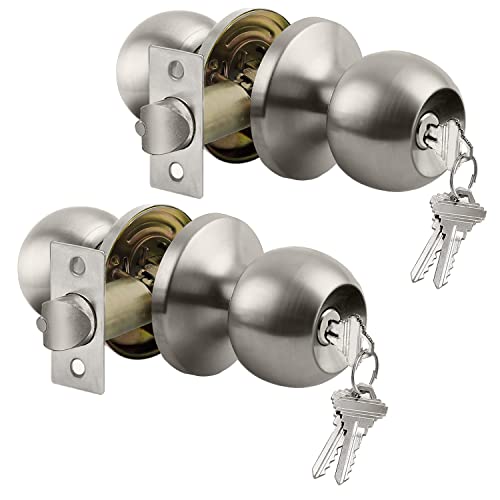
The BESTTEN 2-Pack Keyed Entry Door Knobs gives you a practical Bedroom Door Lock setup for two rooms, with keyed-different locks and three keys per set. Each knob fits 2-3/8-inch or 2-3/4-inch backsets and 1-3/8- to 1-3/4-inch doors, and works on either handing. The stainless steel handle and brass mechanism are tested to 250,000 cycles. Installation is designed for DIY use, but remove the preinstalled machine screws before fitting the knobs.
What We Like:
- You can secure two bedrooms with one purchase.
- Each lock has its own key, helping separate access between rooms.
- Three keys per set provide useful spares for household members or guests.
- The adjustable backset and door-thickness range suit many standard doors.
- Clear instructions and the ball 3-bar design support straightforward installation.
What Could Be Improved:
- The locks are not rekeyable, so changing access later requires replacing the lock.
- You may need to remove the preinstalled machine screws before installation, adding an easy-to-miss setup step.
- Keyed entry is less convenient than a keypad or fingerprint lock for frequent guest access.
Buy this set if you need two conventional locking knobs for bedrooms, guest rooms, or other standard doors and prefer separate physical keys. Skip it if you want keyless entry, one key for both rooms, or the ability to rekey locks after installation.
How to Choose a Bedroom Door Lock
Choose a Bedroom Door Lock that suits your household
Start with how people will enter the room. A keyed lock works well when each person can keep track of a physical key, while keyless access can be more convenient in a busy shared home. Fingerprint models may suit regular occupants who want a quick entry method, and keypad designs can be useful when you need to share access with family members or guests.
Think about who needs access most often, how frequently guests change, and whether you want one consistent method or several options. A room used by a long-term resident may call for a simple everyday solution. A guest room may benefit from access that does not require handing over a spare key.
Balance convenience with control
Access flexibility matters, but so does control. Consider whether you prefer to issue physical keys, share a code, use fingerprints, or combine methods. More than one access method can give you a backup if someone forgets a key or cannot use the usual option, but it can also mean more settings and access details to manage.
For shared homes, discuss who should be able to enter and whether temporary or occasional access is important. Avoid choosing based only on the fastest entry method; make sure the people using the lock can operate it comfortably and understand the process.
Match the lock to the door
Before buying, check the existing door hardware and the type of replacement you need. Door knobs and other entry-lock formats are not automatically interchangeable, so compare the product type with the hardware already installed. Also consider whether you are replacing one lock or securing several bedrooms, since a multi-pack may make sense when the same style is needed in more than one room.
Keep installation in mind as well. A lock that fits your door and matches your preferred hardware format is a better starting point than a feature-heavy option that may not suit the room.
Consider everyday reliability
Shared-home hardware should be straightforward for everyone who uses it. Look for an access method that matches the household’s habits, and think about what happens when a key is misplaced, a guest changes, or someone needs a backup entry option. Traditional keyed entry is familiar and simple, while keyless choices can reduce the need to carry keys.
Finally, compare the trade-offs rather than choosing the longest feature list. Convenience, access control, ease of use, and the number of doors you need to secure should guide the decision.
Which Bedroom Door Lock Should You Choose?
The GHome Smart Fingerprint Door Lock is the best overall pick for flexible keyless access, making it a practical fit for a shared home where people want alternatives to carrying keys. The Yamiry Keypad Smart Door Knob Lock is the best alternative for families and guest access, especially if sharing entry is a priority. Choose between them based on whether fingerprint access or keypad-based sharing better matches your household.

Hi, I’m Mallory Crusta, the heart and mind behind LovelyPetSpot.com.. As a passionate pet enthusiast, I created this space to share my experiences, expertise, and love for all things pets. Whether it’s helpful tips, heartfelt stories, or advice for pet parents, my mission is to make the journey of caring for your furry, feathery, or scaly friends as joyful and fulfilling as possible. Join me in celebrating the incredible bond we share with our animal companions!