As an Amazon Associate I earn from qualifying purchases.
Inserts For Overpronation can help address inward foot rolling, flat feet and the daily discomfort that follows. The right pair should match your activity, shoe space and preferred level of support.
Look for features such as angled heel posts, motion-control shells, firm arch support, heel cushioning and a deep heel cup. A rigid design may offer more stability, while a thin or cushioned insert can fit more easily into everyday footwear.
These five picks were selected from the listed features, with options for running, daily wear, heavy-duty use, flat feet and low-profile shoes. They differ in support style, cushioning and fit approach rather than repeating colour or size variants.
This guide highlights what sets each insert apart, then explains how to choose based on activity, arch support, trimming and shoe compatibility.
Our Top 5 Inserts For Overpronation Picks At A Glance
| Product | ||
|---|---|---|
 |
PowerStep Pinnacle Maxx Maximum everyday stability |
Check Price |
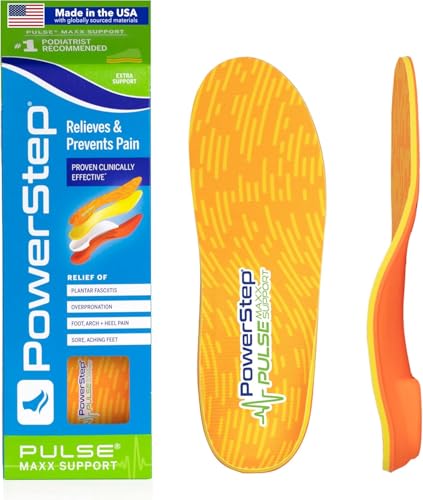 |
PowerStep Pulse Maxx Running and high activity |
Check Price |
 |
Dr. Scholl’s Stability Support Flat feet and alignment |
Check Price |
 |
Xtemodi NASA Grade Foam Orthotics Slim shoe compatibility |
Check Price |
 |
WALK·HERO Heavy Duty Orthotics Heavy-duty standing |
Check Price |
Top 5 Inserts For Overpronation: Detailed Reviews
1. PowerStep Pinnacle Maxx
Inserts For Overpronation need to balance motion control with enough cushioning for daily wear, and the PowerStep Pinnacle Maxx takes that approach. Its slightly angled heel post helps limit inward rolling, while the deep heel cradle adds stability around the rearfoot. The firm but flexible construction supports standard arches without feeling completely rigid, and premium dual-layer cushioning runs from heel to toe. These are the thickest Pinnacle orthotics, so you need shoes with removable factory insoles. They require no trimming and can fit various shoe styles that provide enough internal space.
What We Like:
- The angled heel post targets pronounced inward rolling directly.
- Firm, flexible support provides motion control without a fully rigid feel.
- The deep heel cradle improves stability and helps hold the foot in position.
- Dual-layer cushioning adds comfort from heel to toe.
- No trimming makes fitting simpler in compatible shoes.
What Could Be Improved:
- The thick profile limits compatibility with shoes that have non-removable or shallow factory insoles.
- The firm structure may feel too supportive if you prefer a soft, flexible insole.
- You may need to replace the original insole rather than layer this underneath it.
Buy the PowerStep Pinnacle Maxx if you need maximum everyday stability for flat feet or overpronation and have shoes with removable insoles. Its angled heel and firm cushioning suit pronounced inward rolling. Skip it if your footwear has limited space, fixed footbeds, or you prefer minimal, low-profile inserts.
2. PowerStep Pulse Maxx
PowerStep Pulse Maxx is one of the Inserts For Overpronation built specifically for running shoes and rigorous athletic activity. Its full-length design combines maximum cushioning with maximum support, helping provide stability while you run or train. The neutral arch support suits runners seeking structured guidance without a specialized arch profile. It is also intended to help prevent or relieve discomfort associated with plantar fasciitis, Morton’s neuroma, Achilles tendonitis and shin splints. Because it comes sized rather than trimmable, you order your shoe size and can move it between shoes.
What We Like:
- Maximum cushioning helps make demanding activity more comfortable.
- Maximum support targets runners who need stronger stability.
- The full-length shape is designed for running shoes.
- Sized construction avoids trimming during setup.
- The insert is backed by a 30-day money-back guarantee.
What Could Be Improved:
- Its running-focused design may be less suitable for shoes outside your athletic rotation.
- You must choose the correct shoe size because the insert is not designed for trimming.
- The neutral arch profile may not suit runners looking for a different arch shape.
Buy the PowerStep Pulse Maxx if you run or train frequently and want substantial cushioning paired with corrective support for overpronation. It also suits you if pain prevention is a priority. Skip it if you need a trim-to-fit insert, prefer minimal cushioning or want support designed for non-running footwear.
3. Dr. Scholl’s Stability Support
Dr. Scholl’s Stability Support Insoles are Inserts For Overpronation designed for men with flat feet, low arches, fallen arches, and alignment concerns. Their advanced arch support lifts and cradles the foot, while the motion-control stabilizing shell helps support balance, posture, and ankle alignment during everyday activity. A dedicated shock-absorbing heel cup reduces impact with each step, and added cushioning aims to limit lower-body stress. The design is intended for consistent, all-day support and fits men’s sizes 8–14. This is a stability-focused insert, not a minimalist cushioning-only option.
What We Like:
- The motion-control shell supports balance, posture, and foot alignment.
- Advanced arch support is suited to flat feet, low arches, and overpronation.
- The shock-absorbing heel cup helps reduce impact with every step.
- Added cushioning supports comfort during daily activities.
- The design targets consistent, all-day support.
What Could Be Improved:
- The men’s size range is limited to sizes 8–14.
- The stabilizing shell prioritizes structure and control, so it may feel less flexible than a cushioning-only insert.
- Its focus is everyday stability rather than a specifically activity-focused design.
Buy it if you have flat feet, low arches, or overpronation and want structured daily support with a focus on ankle alignment and impact reduction. Skip it if you need a minimalist, highly flexible insert or fall outside the men’s 8–14 size range.
4. Xtemodi NASA Grade Foam Orthotics
Xtemodi NASA Grade Foam Orthotic Insoles are thin Inserts For Overpronation designed for flat feet and inward rolling. Their ergonomic arch support aims to help stabilize foot alignment, while supercritical foam provides lightweight cushioning and responsive rebound for daily wear. The low-profile shape fits sneakers and work shoes with less bulk than thicker inserts, and you can trim them with scissors for a closer shoe fit. Remove your existing insoles first, then test the trimmed fit before wearing them regularly.
What We Like:
- The slim profile suits tighter sneakers and work shoes.
- Supercritical foam keeps the cushioning lightweight with responsive rebound.
- Ergonomic arch support is designed to help reduce inward rolling.
- You can trim the inserts for a more tailored fit.
- They offer a practical option for everyday flat-foot support.
What Could Be Improved:
- Trimming takes care and may require more than one fit check before you get the right shape.
- You need to remove your original insoles, which may not work well in shoes with permanently attached footbeds.
- The product is focused on a low-profile design, so it may not suit you if you prefer a thicker, more cushioned insert.
Buy these if you need lightweight arch support for flat feet or overpronation and your shoes have limited room. They make the most sense for sneakers and work shoes that cannot accommodate bulky orthotics. Skip them if you want a thicker insert or do not want to trim and refit the insole yourself.
5. WALK·HERO Heavy Duty Orthotics
For Inserts For Overpronation designed for extended standing, the WALK·HERO Heavy Duty Orthotics combine strong rigid arch support with full-length cushioning. An orthopedic nylon sheet supports the arch, while a 2mm high-density EVA layer, 3mm high-resilience OrthoLite layer, and soft PU heel cushioning help absorb impact underfoot. They are intended for people weighing over 220 pounds and fit work shoes, sneakers, casual shoes, and leather boots. Expect an adjustment period, since the firm arch can initially create noticeable pressure as your feet adapt.
What We Like:
- The rigid arch support suits long periods of standing and may help manage pressure linked to pronation.
- Full-length cushioning covers the foot instead of limiting support to the heel or arch.
- The layered EVA, OrthoLite, and PU construction targets shock absorption and step comfort.
- The design works with work shoes, boots, sneakers, and casual footwear.
- They are made specifically for users weighing over 220 pounds.
What Could Be Improved:
- The firm, high-arch feel may be uncomfortable if you prefer softer or less structured inserts.
- You need to introduce them gradually, as the manufacturer notes that initial arch pressure is possible.
- They may not suit shoes with limited interior space, although the product is intended for standard shoe sizes.
Buy these if you weigh over 220 pounds, spend extended hours standing, and want firm arch control with cushioning for work shoes or boots. Skip them if you prefer flexible support, have low tolerance for an adjustment period, or need a particularly slim insert.
How To Choose The Right Overpronation Inserts
Inserts For Overpronation should match how you move, where you wear them, and how much support you actually need. The right choice should feel stable without making your shoes uncomfortably tight or changing your stride more than necessary.
Choose support for your main activity
Start with your most common use, not your occasional one. Daily walking and general wear call for dependable stability, while running and other high-activity use may suit an insert intended for repeated movement. If you spend long periods on your feet, prioritise an option described for heavy-duty standing rather than choosing solely by its cushioning or appearance.
Match the insert to your foot and alignment needs
Flat feet and alignment concerns point toward a design focused on helping support those needs. Overpronation can vary in severity, so avoid assuming that the firmest option is automatically best. You want enough structure to feel supported, but not so much that the insert feels intrusive or uncomfortable during normal use.
Check your shoe space before buying
Compatibility matters as much as support. A substantial insert may work well in a roomier everyday shoe but leave a slimmer shoe feeling cramped. Consider the shoes you plan to use most, including their available interior space, removable insole arrangement, and overall fit. An option described as suitable for slim shoes can be a more practical choice when space is limited.
Consider comfort over a full day
Think beyond the first few minutes of wear. Your insert should remain tolerable during the activity it is meant to support, whether that means commuting, running, or standing for extended periods. If you rotate between several activities, decide which one deserves the best match, or choose based on the use that creates the greatest need for support.
Finally, compare your shortlist by purpose rather than by a general promise of correction. A daily-stability insert, a high-activity option, a flat-foot and alignment choice, a slim-shoe model, and a heavy-duty standing insert each solve a different practical problem.
Choosing Your Best Match
The PowerStep Pinnacle Maxx is the best overall pick because it is positioned for maximum everyday stability, making it the most versatile choice for regular use. The PowerStep Pulse Maxx is the best alternative if running or high activity is your priority. Choose between them based on your routine: everyday support favours the Pinnacle Maxx, while more demanding movement favours the Pulse Maxx.

Hi, I’m Mallory Crusta, the heart and mind behind LovelyPetSpot.com.. As a passionate pet enthusiast, I created this space to share my experiences, expertise, and love for all things pets. Whether it’s helpful tips, heartfelt stories, or advice for pet parents, my mission is to make the journey of caring for your furry, feathery, or scaly friends as joyful and fulfilling as possible. Join me in celebrating the incredible bond we share with our animal companions!