As an Amazon Associate I earn from qualifying purchases.
Choosing a first trike can be tricky when your 3-year-old is still developing balance, steering and pedaling skills. You also need a model that fits comfortably and handles everyday play.
Look for an adjustable seat, stable construction, easy assembly and features that match how your child rides. Storage, carry handles, lighting wheels and riding modes can also make a difference.
These five picks were selected from their listed age ranges and features, with each offering a different reason to consider it. The selection includes adjustable everyday trikes, lightweight designs, beginner-friendly options and sturdier outdoor models.
Use the quick comparison to narrow the field, then read the individual reviews and buying guide before choosing a trike for your child.
Our Top 5 Trikes For 3 Year Olds Picks at a Glance
| Product | ||
|---|---|---|
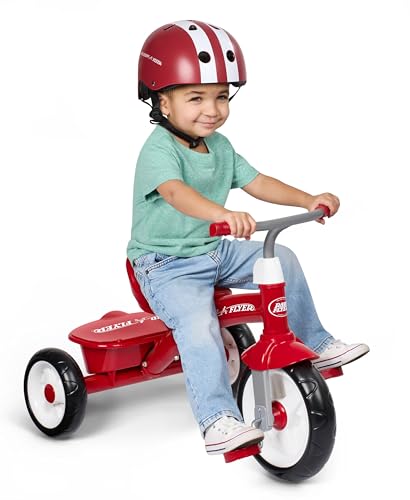 |
Radio Flyer Red Rider Trike Growing everyday riders |
Check Price |
 |
YGJT 3-in-1 Tricycle Progressive riding practice |
Check Price |
 |
SEREED Colorful Lighting Toddler Tricycle Lightweight easy handling |
Check Price |
 |
Umatoll Toddler Tricycle Park trips and storage |
Check Price |
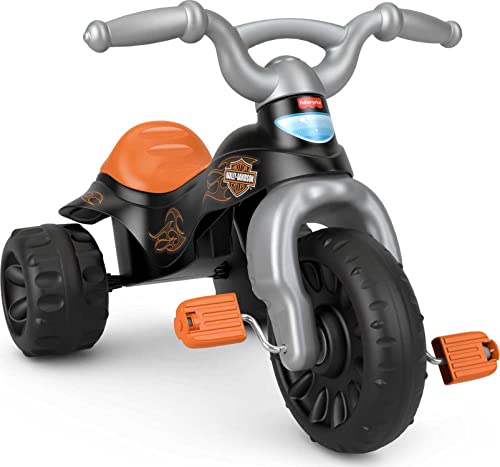 |
Fisher-Price Harley-Davidson Tough Trike Sturdy outdoor play |
Check Price |
Top 5 Trikes For 3 Year Olds: Detailed Reviews
1. Radio Flyer Red Rider Trike
The Radio Flyer Red Rider Trike is a practical choice among Trikes For 3 Year Olds, especially for everyday neighborhood rides. Its sturdy steel construction provides a solid base, while quietride wheels help keep trips smoother and less disruptive. The adjustable seat lets the trike fit children from ages 2.5 to 5 as they grow. Comfort-grip handlebars support confident steering, and the covered rear bin gives children a place for toys, snacks, or treasures. A carry handle on the seat back also makes curb lifts, car trips, and storage easier for parents.
What We Like:
- The adjustable seat helps the trike stay useful as your child grows.
- Quiet wheels make neighborhood rides more pleasant for the family.
- The covered rear bin gives children practical space for small belongings.
- The seat-back carry handle simplifies transport and storage.
- Comfort-grip handlebars support a more comfortable ride.
What Could Be Improved:
- The listed design does not include a parent push handle, so it may be less convenient for children who cannot ride independently yet.
- Its age range ends at 5, which limits its usefulness for older or taller children.
- The sturdy steel construction may be less convenient to carry than a lighter trike.
Buy it if you want a straightforward first trike with an adjustable seat, quiet wheels, child-friendly storage, and easier parent transport. Skip it if you need a parent push feature or expect the trike to suit a child beyond the listed 2.5-to-5 age range.
2. YGJT 3-in-1 Tricycle
The YGJT 3-in-1 Tricycle gives Trikes For 3 Year Olds three ways to practise riding: a pedal-less three-wheel training mode, a two-wheel balance-bike mode, and a pedal tricycle mode. That progression lets your child start with basic balance and gradually work toward pedaling. Its foldable design makes it easier to store or take along for outdoor play, while the carbon steel frame and EVA wheels suit various outdoor roads. Non-slip handlebars support a steadier grip, and assembly should take only a few minutes with the instructions.
What We Like:
- Three riding modes support progression from balance practice to pedaling.
- The folding frame helps simplify storage and transport.
- A carbon steel frame is designed for durable everyday use.
- EVA wheels can handle various outdoor surfaces.
- The 2-to-5 age range may provide several years of use.
What Could Be Improved:
- You need to measure your child carefully because the recommended modes and age ranges differ.
- The product details do not mention a parent push handle, so it is intended for children who can practise independently.
- The two-wheel balance-bike mode may not suit a child who is not ready to manage balance on two wheels.
Buy this if you want one adaptable ride-on that can support a child from early balance practice through pedal training, especially when foldable storage matters. Skip it if you want parental steering assistance or a simpler single-stage tricycle. Check your child’s measurements before choosing it.
3. SEREED Colorful Lighting Toddler Tricycle
The SEREED Colorful Lighting Toddler Tricycle is a practical choice among Trikes For 3 Year Olds when you want easy handling and quick setup. Its 6.6-pound frame is light enough for a child to move independently, while the sturdy construction supports everyday play. Spring-loaded snap assembly gets it ready in minutes, and precision bearings with the pedal design aim to make riding smoother. The three-position seat and two-position handlebar accommodate growing children. Detachable baskets carry toys or snacks, while the rotating rear wheels light up without batteries.
What We Like:
- The 6.6-pound frame is easy for children to move and for adults to carry.
- Snap assembly saves time before the first ride.
- The adjustable seat and handlebar provide room for growth.
- Rear wheels light up as they rotate without requiring batteries.
- Detachable baskets give children a place for toys and snacks.
What Could Be Improved:
- The lighting is limited to the rotating rear wheels, not the entire tricycle.
- The handlebar has only two positions, so fit adjustments are less flexible than the seat.
- The lightweight design may feel less substantial to families who prefer a heavier trike.
Buy it if you want a lightweight tricycle that is quick to assemble, easy to move, and engaging during short rides or play sessions. It suits families who value simple storage and adjustable fit. Skip it if you want extensive handlebar adjustment or lighting across the whole trike.
4. Umatoll Toddler Tricycle
Among Trikes For 3 Year Olds, the Umatoll Toddler Tricycle suits park trips and everyday outdoor play. Its sturdy carbon steel frame, wide wheelbase and non-slip pedals give beginners a stable platform for practising balance, steering and coordination on indoor floors or pavement. A three-position adjustable seat lets you move the riding position as your child grows. Two storage baskets hold snacks and small treasures for playdates, while the rear wheels glow without batteries, adding visual fun with every push. Assembly is designed to take only a few minutes.
What We Like:
- The wide wheelbase helps reduce tipping during beginner rides.
- The three-position seat supports a longer period of use as your child grows.
- Dual baskets give children useful space for snacks and collected treasures.
- Battery-free glow wheels add visual interest without charging or replacing batteries.
- Non-slip pedals help maintain grip on indoor floors and outdoor pavement.
What Could Be Improved:
- The glow wheels need the tricycle to move, so they will not provide light while parked.
- The two baskets add useful storage, but they may make the tricycle feel less streamlined.
- The design is intended for young beginners, so older or more confident riders may outgrow it as their riding skills develop.
Buy this Umatoll if you want a beginner-friendly tricycle with adjustable seating, simple storage and battery-free visual fun for park playdates. It suits families who value a stable wide-wheelbase design and quick assembly. Skip it if you need advanced riding features, stationary lights or a model aimed at older, more capable riders.
5. Fisher-Price Harley-Davidson Tough Trike
For Trikes For 3 Year Olds who enjoy outdoor play, the Fisher-Price Harley-Davidson Tough Trike focuses on stability and simple, kid-powered riding. Its sturdy frame and wide wheelbase help provide a planted feel, while rugged-tread tires are suited to off-road pedaling over outdoor surfaces. Large foot pedals and easy-grip handlebars support independent riding, and the 55-pound capacity covers toddlers and preschoolers ages 2-5. Lift the seat to access a hidden compartment for small take-along items, adding useful storage without an external basket.
What We Like:
- The wide wheelbase supports a stable feel during outdoor rides.
- Rugged-tread tires suit off-road pedaling and outdoor paths.
- Large pedals and easy-grip handlebars encourage independent riding.
- The under-seat compartment stores small toys or other gear.
- The sturdy frame is designed for toddlers and preschoolers up to 55 pounds.
What Could Be Improved:
- The wide design may take more storage space than a narrower tricycle.
- There is no stated adjustable seat or other feature for fine-tuning the fit as your child grows.
- The Harley-Davidson colors and graphics may not appeal to every child.
Buy it for a sturdy, straightforward tricycle suited to outdoor play, park paths, and children who like carrying a few small items. Skip it if compact storage, adjustable fit, or a lighter, more minimalist design matters more than a wide stance and rugged-tread tires.
How To Choose Among Trikes For 3 Year Olds
Choosing Trikes For 3 Year Olds starts with matching the ride to your child’s current confidence, not just their age. A good tricycle should feel manageable today while leaving room for the kind of riding your child actually enjoys. Think about where it will be used, how much help your child needs, and how easily you can store it between rides.
Choose for your child’s riding stage
Some three-year-olds are ready to pedal independently, while others still need time to practise steering, balance, and starting and stopping. If your child is still learning, a design focused on progressive riding practice may make more sense than one aimed at everyday independent riding. For a more confident rider, straightforward handling can help keep outdoor play moving without constant assistance.
Prioritise handling and confidence
Weight and overall manageability affect how easily your child can control a trike and how easily you can carry it. A lightweight option can suit children who are still developing coordination or families that regularly lift the trike into and out of storage. Also consider whether the design seems appropriate for the spaces your child uses, such as a garden, pavement, or park path.
Match the trike to your routine
Consider whether you want a trike mainly for short practice sessions, everyday neighbourhood rides, park trips, or active outdoor play. A model suited to park trips may be more useful if you regularly leave home with it, while a sturdy outdoor-play choice may fit children who use their ride mostly in open play areas. Lighting or colourful details may also appeal to children who respond to visual features, though they should not outweigh practical handling.
Check storage and long-term value
Before choosing, decide where the trike will live when it is not in use. Storage matters more in smaller homes, shared hallways, and busy family spaces, so a manageable design can be easier to live with. If you want one purchase to support changing ability, look for a trike described as growing with everyday riders or offering progressive use. You should still choose based on your child’s present needs rather than paying for a future stage they are not ready to use.
Which Trike Should You Choose?
The Radio Flyer Red Rider Trike is the best overall pick for growing everyday riders because it suits a child who wants a dependable option for regular use. The YGJT 3-in-1 Tricycle is the best alternative if progressive riding practice matters more. Its 3-in-1 approach makes it the stronger choice for families whose three-year-old is still building confidence and may benefit from a trike that supports different stages of learning.

Hi, I’m Mallory Crusta, the heart and mind behind LovelyPetSpot.com.. As a passionate pet enthusiast, I created this space to share my experiences, expertise, and love for all things pets. Whether it’s helpful tips, heartfelt stories, or advice for pet parents, my mission is to make the journey of caring for your furry, feathery, or scaly friends as joyful and fulfilling as possible. Join me in celebrating the incredible bond we share with our animal companions!